When should you inspect chain slings?
Inspect chain slings and accessories before each use and before placing them into storage. Check for visible faults in links and hooks and distortion of fittings.
How should you check chain slings during inspection?
A competent person should inspect chain slings periodically, according to the manufacturer’s recommendations. For record-keeping purposes, it is useful for each chain to have a metal tag with an identification number and load limit information. Information about the chain length and other characteristics, as well as an inspection schedule, should be recorded in a logbook.
- Clean the sling before inspection.
- Hang the chain up or stretch it out on a level floor in a well-lit area. Remove all twists. Measure the sling length. Discard if a sling has been stretched.
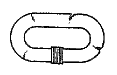
- Make a link-by-link inspection and discard if:
a) Wear exceeds 15% of a link diameter
b) Cut, nicked, cracked, gouged, burned, or corrosion pitted.
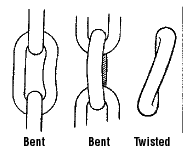
c) Twisted or bent.
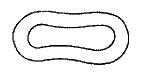
d) Stretched. Links tend to close up and get longer.
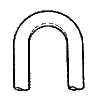
- Check the master link, load pins and hooks for any of the above faults. Hooks should be removed from service if they have been opened more than 15% of the normal throat opening, measured at the narrowest point, or twisted more than 10° from the plane of the unbent hook.
- Manufacturers’ reference charts show sling and hitch capacities. Record manufacturer, type, load limit and inspection dates.